

Intelligent Automation Systems for Field, Factory, & Healthcare
Pioneering breakthroughs in intelligent robotic manipulation, 3D computer vision, and biomedical assistive technologies. We engineer deployable intelligent automation solutions that solve real-world challenges across Canada's agri-food sector, advanced manufacturing floors, and clinical rehabilitation.
Pioneering Research Across Three Critical Verticals
Our research bridges advanced robotics, computer vision, and AI to solve practical challenges across commercial agriculture, modern manufacturing, and assistive healthcare.
Agricultural Robotics & Smart Agriculture
Intelligent greenhouse harvesting, multi-modal soft robotic grippers, deep learning field scouting, and real-time spatial mapping for precision crop and weed management.
Industrial Automation & Robotic Inspection
High-speed inline vision inspection, real-time defect classification, robotic bin-picking of deformable parts, and tactile slip sensing for industrial manipulation.
Biomedical Robotics & Assistive Technologies
Hands-free vision-guided assistive feeding platforms, interactive VR neurorehabilitation for stroke recovery, personal care robotics with contact-force compliance, and soft robotic rehabilitation devices.
Field-Validated Research Platforms
From commercial greenhouse canopies and automotive manufacturing floors to clinical rehabilitation suites, explore our active field-deployed systems.
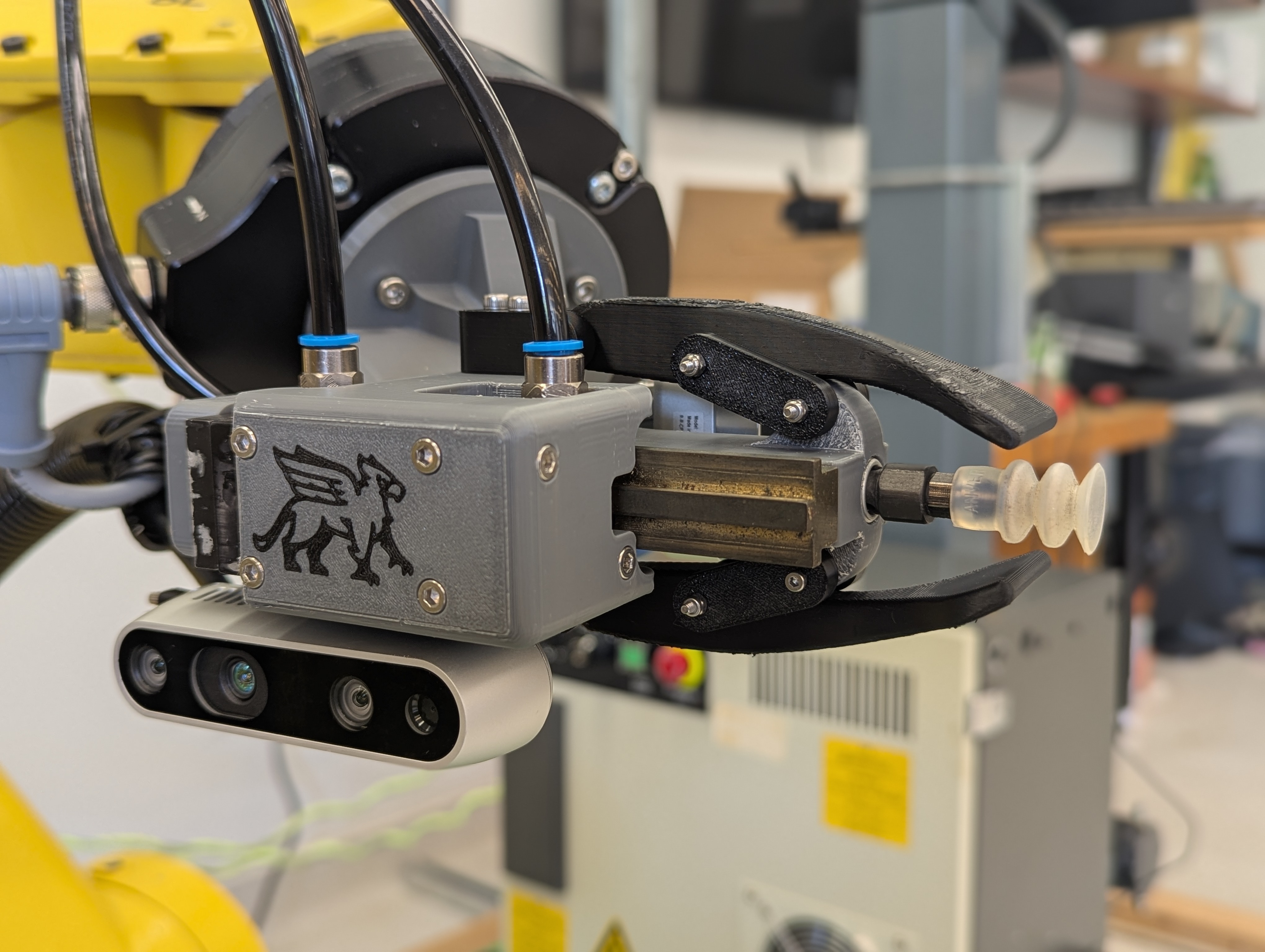
GIGAS: Intelligent High-Wire Greenhouse Harvesting Robot
The Guelph Intelligent Greenhouse Automation System (GIGAS) is an intelligent robotic platform engineered for high-wire greenhouse tomato harvesting. Evaluates pedicel-targeting hold-and-cut mechanisms (P1, P2, S1, S2) alongside multi-modal tomato-targeting soft grippers (SG1, SG2) to overcome cluster occlusions and delicate fruit handling. The flagship SG2 end effector combines pneumatic four-bar linkage fingers (38.8 mm to 104 mm span), a double-bevel vacuum suction cup (7.8 N/cm² suction), and closed-loop force-torque sensing to locate and detach mature beefsteak tomatoes at the natural pedicel abscission zone. Demonstrated 100% positioning success and an 81% overall harvesting success rate across commercial greenhouse trials at AMCO Farms (Leamington, ON) and Singh Greenhouses (Millgrove, ON) without produce bruising or calyx damage.
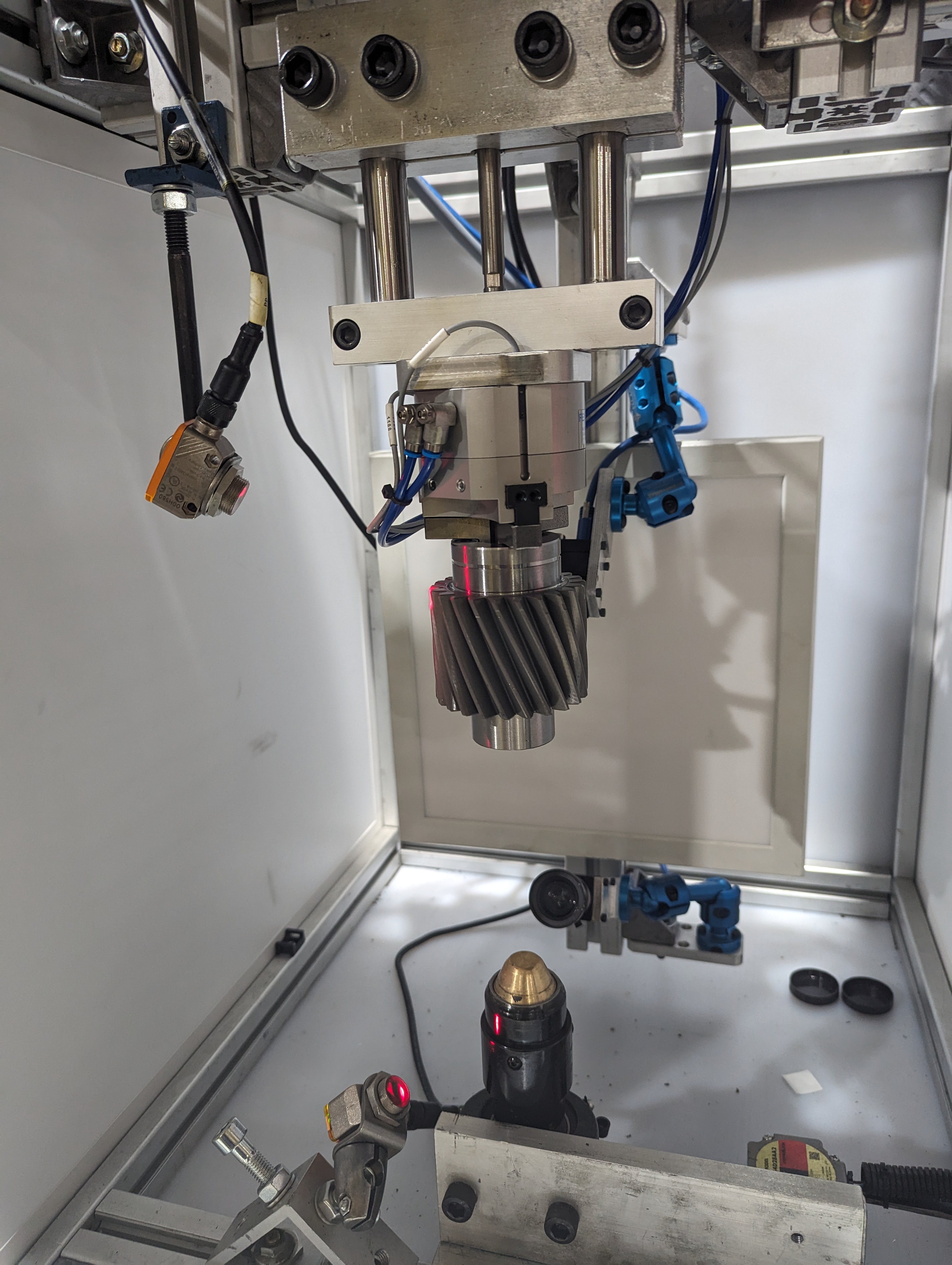
Automated In-Line Inspection Station for Automotive Gears
An industrial automated vision inspection station designed for 100% inline quality control of automotive pinions and gears. Solves high-throughput manufacturing cycle time constraints by optimizing stepper actuator kinematics, high-speed camera exposure triggers, and a multi-threaded asynchronous control server architecture. Reduced scan and inference cycle time from 90 seconds to 7.5 seconds per pinion while validating defect detection on 537 scanned gears in production environments.
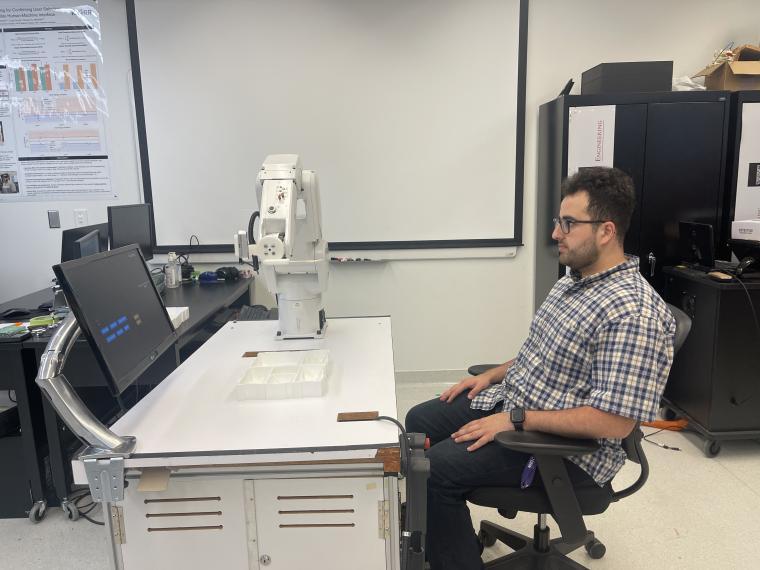
Head-Controlled Interface for Human Assistive Robotic Devices
A hands-free, vision-guided assistive feeding platform designed for individuals with severe upper-limb motor impairments. Integrates a YOLOv9-Seg network for food item and modular tray instance segmentation, MediaPipe Face Mesh tracking for intuitive head-gesture navigation, and a mouth-open dwell-free confirmation trigger. Evaluated in user trials with 22 participants, demonstrating 84.7% head-tracking accuracy, 92.6% graph traversability, and a 9.69/10 safety rating on commodity CPU hardware.
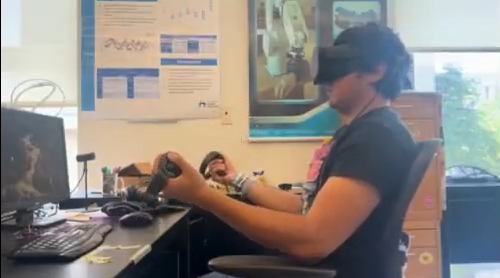
Virtual Reality Mirror Therapy System for Stroke & ABI Rehabilitation
An immersive Virtual Mirror Therapy (VMT) neurorehabilitation system designed to treat upper-extremity hemiplegia following stroke and acquired brain injury (ABI). Replaces conventional physical mirrors with an Oculus Rift CV1 VR headset, Leap Motion optical hand/finger tracking, and Microsoft Kinect v2 skeletal tracking to create an interactive virtual environment that projects real-time mirrored bilateral movements of the unimpaired limb onto the hemiplegic limb avatar. Clinically evaluated in a randomized controlled trial (RCT) with 7 inpatients at the Hamilton Health Sciences Regional Rehabilitation Centre across five functional rehabilitation activities, demonstrating significantly higher patient engagement (16.7 vs 6.0 on RTES) and increased therapy repetition rates compared to traditional mirror therapy.
Recent News & Milestones
Engineering Researchers Create New Tools to Improve Digital Accessibility open_in_new
U of G Engineering highlighted new research led by Dr. Hussein Abdullah, Zeyad Ghulam, and Greg French introducing a hands-free head-and-mouth tracking interface using Intel RealSense depth vision to restore digital independence for individuals with severe upper-limb motor impairments, presented at IEEE ICORR 2025.
Weeding Out Inefficiency: U of G Engineer Developing Robotics for Lima Bean Farmers open_in_new
U of G News featured research led by Dr. Medhat Moussa developing an automated tractor-mounted robotics system that uses computer vision and AI to scout for weeds in lima bean crops, generating field density maps for precision management in partnership with Nortera Foods and Haggerty AgRobotics.
U of G-Developed App Opening Doors to Accessibility open_in_new
U of G News highlighted the Smart Door Access System and OpenWay app developed by Dr. Hussein Abdullah, Zeyad Ghulam, and engineering team members, enabling individuals with physical disabilities to open doors hands-free via smartphone Bluetooth or voice commands, with active testing at the Albert A. Thornbrough Building.
Featured Papers
Head Tracking for Confirming User Selection for Human-Machine Interaction
Z. Ghulam, S. G. French, and H. A. Abdullah
Smart Compression Sock for Early Detection of Diabetic Foot Ulcers
J. Billings, J. M. Gee, Z. Ghulam, and H. A. Abdullah
Object Detection in Tomato Greenhouses: A Study on Model Generalization
S. Haggag, M. Veres, C. Tarry, and M. Moussa